A Comprehensive Faith
I’ll never forget the first time I opened Rush’s Institutes of Biblical Law. It was (providentially) the first book of his I’d ever seen. The first impression I had when perusing it was, “What in the world does swearing have to do with revolution, or murder with taxation, or the Virgin Birth with property? The author seems to be mixing the sacred and secular.” I didn’t know at the time that this mixing of the so-called secular and sacred was one dimension of the genius of Rush’s thought. The theme of this conference honoring Rush is “A Comprehensive Faith.” It’s an altogether appropriate theme. Rush has made valuable, in some cases unprecedented, contributions to modern Christianity.
- P. Andrew Sandlin
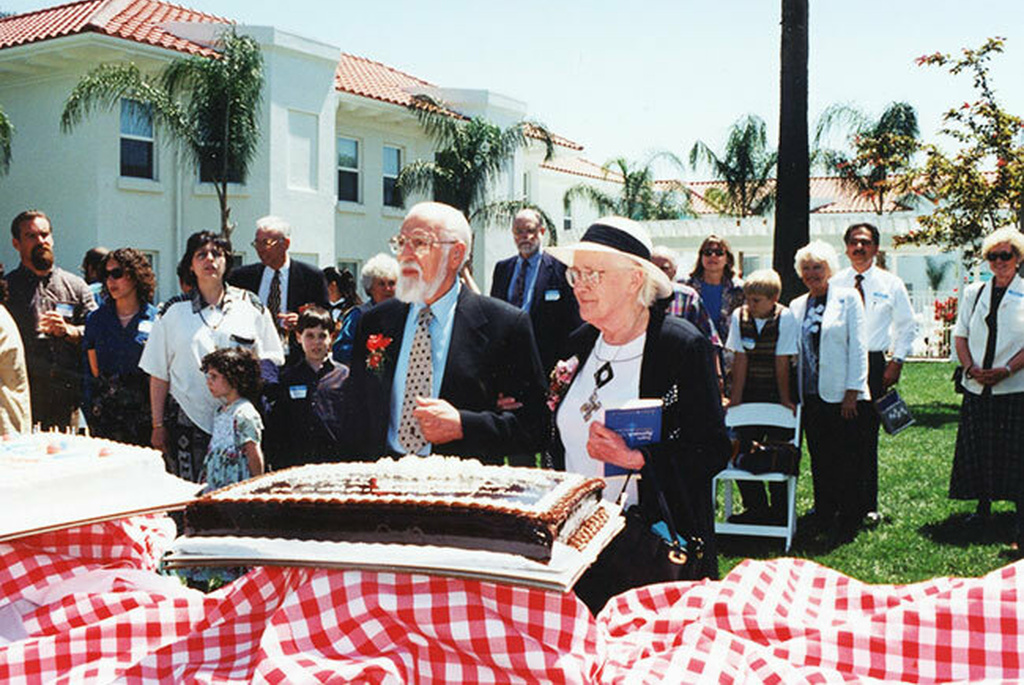
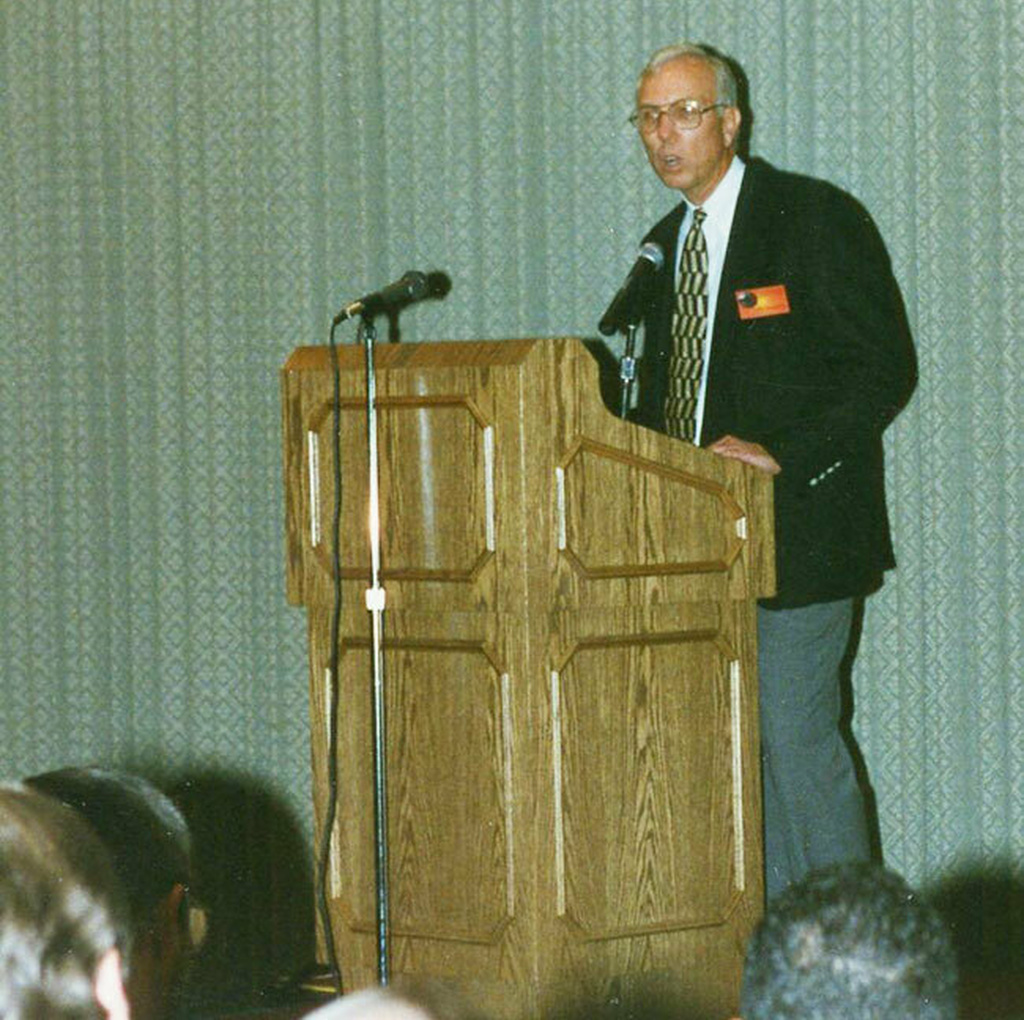
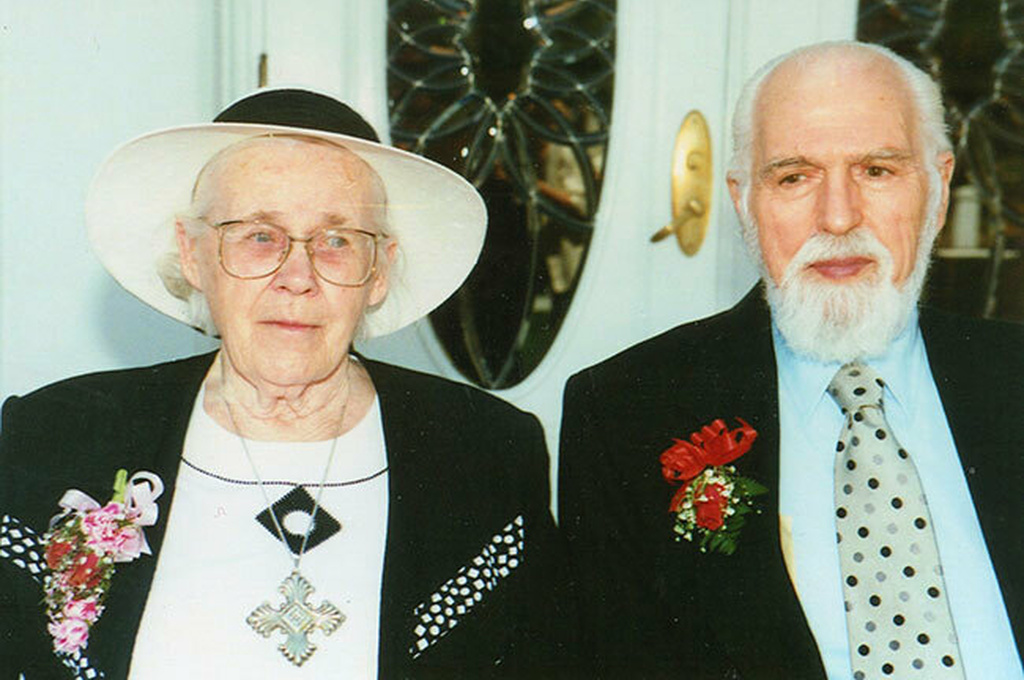
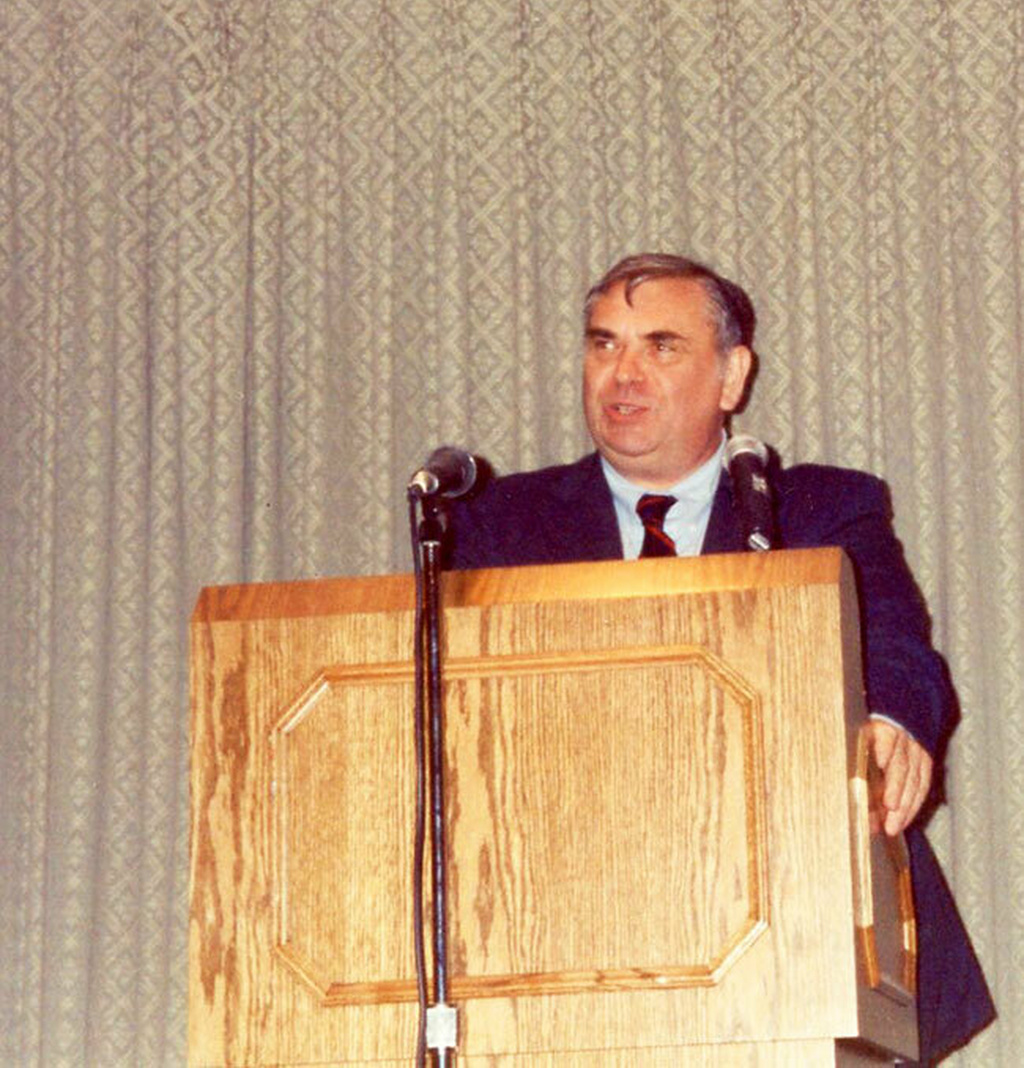
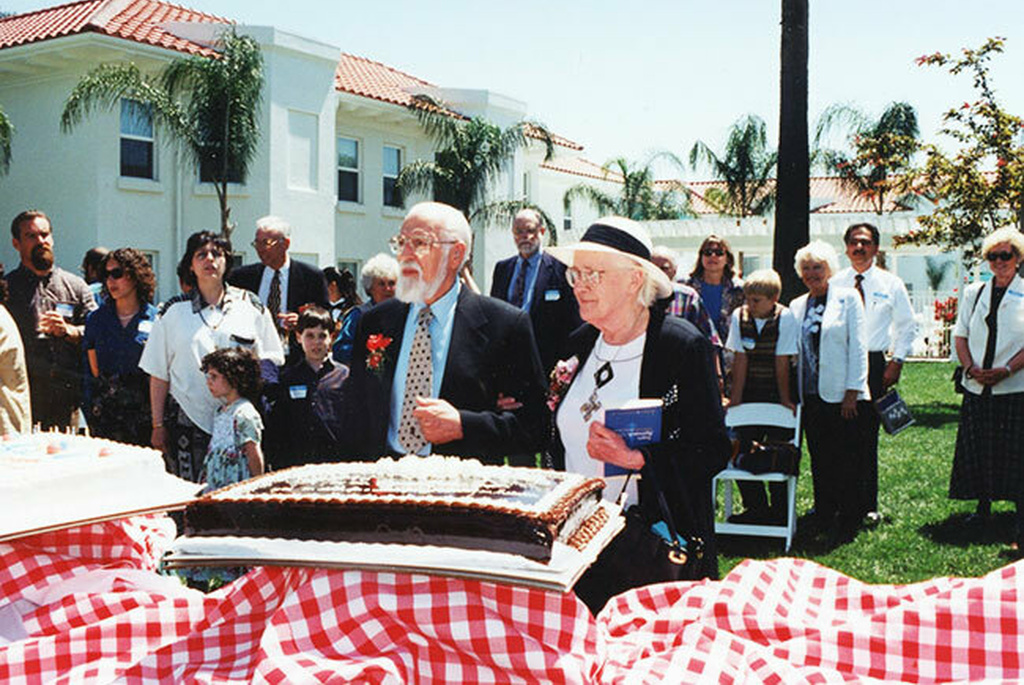
NOTE: The following is an expanded version of a talk the author delivered April 27, 1996 at the San Jose Conference on Christian Reconstruction honoring R. J. Rushdoony on his 80th birthday.
Rushdoony’s Work
I’ll never forget the first time I opened Rush’s Institutes of Biblical Law. It was (providentially) the first book of his I’d ever seen. The first impression I had when perusing it was, “What in the world does swearing have to do with revolution, or murder with taxation, or the Virgin Birth with property? The author seems to be mixing the sacred and secular.” I didn’t know at the time that this mixing of the so-called secular and sacred was one dimension of the genius of Rush’s thought. The theme of this conference honoring Rush is “A Comprehensive Faith.” It’s an altogether appropriate theme. Rush has made valuable, in some cases unprecedented, contributions to modern Christianity. He more than anyone else has championed the work of Christian philosopher and apologist Cornelius Van Til. Rush’s view of the law spawned the theonomic movement—a return to the written law of God as a standard of all of life. He was among a handful who helped revive postmillennialism this century. Today if a burgeoning number of Christians hold to a victorious eschatology, they have largely Rush to thank for it. He has pushed postmillennialism for nearly forty years. He has been called the father of the home-schooling movement, and with good reason. Back in the late 50s and early 60s when he was documenting the bankruptcy of government education, most Christians blithely sent their children to those Satanic hothouses with little thought of the evils there. Unfortunately, most professing Christians still send them there. But the percentages are changing. More and more Christian parents are educating their children at home, or in Christian day schools. Without Rush’s incessant stress on the evils of government education and the necessity of Christian education, this revival would not have been nearly as dramatic. It may not have happened at all. In the 70s especially, when churches and Christian schools came under increasing attack by a hostile civil government. Rush would travel, at Chalcedon’s expense, to serve as an expert witness in landmark and other important church-state court cases. Many times, as a result of Rush’s knowledgeable testimony, the Christians, not to mention religious liberty, would come out victors.
Rush and Chalcedon have led the way in the work of Christian reconstruction. Rush, in fact, is the founder of this thought. He has published the Chalcedon Report for over 30 years, and the more in-depth Journal of Christian Reconstruction for over 20 years. He has written nearly forty books and published through Ross House numerous others demolishing the pretentious presuppositions of apostate religion and culture, and reestablishing the foundations of Christian civilization. We observe today a great surge of Christian involvement in politics. This would have been impossible without Rush’s work. He influenced a number of pastors and lesser thinkers in the 60s and 70s who picked up his vision and have pressed Christian claims in the conservative political arena. The conservative showing in national, state, and local politics has been nothing short of staggering as of late. It would have been unthinkable even as late as 20 years ago. Much of this is due to blandly Roman Catholic and Anglican influence, like that of William Buckley, Russell Kirk, and National Review. But a great deal is also due to Rush’s work, which filtered down to lesser and more synthetic thinkers like Francis Schaeffer and Jerry Falwell whose work galvanized evangelicals and fundamentalists to political action.
Building on Van Til’s work, Rush has disdained every form of natural-law theory as a basis of life and thought, and returned our thinking to the Bible. His Institutes was a clarion call to the fact that all our answers to life should be explicitly Biblical answers. Today natural-law theory is almost dead everywhere except in the Roman Church and among some backwater evangelicals. Increasingly the only two options are Biblical law, and positivistic or sociological law—might makes right.
I don’t want to give the impression that Rush’s road has been easy. He’s had to fight every step of the way. And if the Christian Reconstruction Movement today is gaining huge successes (and it is), this is because Rush was a trailblazer, fighting, often alone, through the underbrush of modern apostate culture and religion.
Rushdoony’s Brilliance
But the significance of Rush’s work runs even deeper than these things. We should understand that Rush has done what no one before him has done. Surely there were those before him that saw the necessity of a comprehensive Faith, a Christianity that would shape all of life and thought. Abraham Kuyper and Herman Dooyeweerd come immediately to mind. But Rush went beyond them. They saw the need to build a fully Christian edifice of life. But Rush has actually shown how this can be done. Many before Rush pined for the house; Rush has started building the house. He has laid the foundations for the revival of Christian civilization—not a return to medieval Christian civilization, as good as that was at some points. He has shown how it’s possible to have a truly Biblical Christian civilization. Apart from the Puritans, this is virtually unprecedented. Even the reformers retained vestiges of compromise with alien elements.
We should thank God that Reformed doctrine and practice are experiencing a great revival. Calvinist publishers are churning out excellent works from the Reformation and Reformed dogmatician era, and 1 hope we can see even more of these works. There is, ironically, a subtle problem such a revival tends to produce. It is the wistful longing for an idyllic past, with perhaps the hope that we can reproduce that past in modern culture. A new Cromwellian commonwealth! How delectable it sounds.
A Dangerous Revival
But it is simply not possible. It’s not only not possible, it’s not even desirable. Why? Western society today is not the society of the first half of the seventeenth century. The differences are not cosmetic, but substantial. By and large, Western society then was largely Christian. I do not mean that everybody was actually a Christian. Nor do I mean that Christians self-consciously were trying to create or maintain a Christian culture. The fact is that medieval (as well as Byzantine) culture was enveloped in Christian themes, even if some of them were misguided. An obvious example in the economic sphere was usury. The medieval Roman church opposed usury on assertedly Biblical grounds. We as Protestants believe they were wrong, of course, but the point is that they were trying to do things in a Christian manner even if they were not always successful.
The Real Problem
The big problem with the Christian culture of the West (or of Byzantium for that matter) was not that it was secular. Far from it. The church dominated virtually every area of life. And this was the problem. The problem was that Christian culture was church-centered rather than Faith-centered. Everything Christian had to go through the medium of the church.
The Reformation worked to reverse this trend somewhat. The reformers’ attacks on sacerdotalism broke the monopoly of the Church of Rome and put a great deal of religious responsibility back into the hands of ordinary Christians. The Puritans later stressed the holiness of vocation. A pious, hard-working, provident farmer is just as godly and religious as a clergyman.
Let’s get this straight. The main problem facing the reformers was the pollution of the gospel, and the monopoly of the Faith by the institutional church. The reformers were not facing most of the same problems that confront us today. Don’t misunderstand. There is still the polluted view of the gospel, and it is no better in most of Protestantism than it is in the Church of Rome or Eastern Orthodoxy. But there today is a clear-cut alternative to a polluted gospel in the message of historic Protestantism. As the X-Files says, “The Truth is out there.”
The most pernicious threat we face today is not a polluted gospel, but the more fundamental sin of the Luciferian religion of human autonomy of all areas of life. The reformers were facing human autonomy in the church, especially in soteriology and church order (sadly, it is still around). But at least the medieval and Reformational culture was dominated by a Christian ethos, even if every aspect of culture was not right. Today, Christianity has lost its grasp on culture. Wouldn’t it be a luxury to debate election, consubstantiation, and eschatology in a relaxed atmosphere? We don’t have that luxury. Many decades ago, the pagans transformed Christian culture into a secular insane asylum, and now the inmates are running the asylum.
When you read the reformers and their immediate successors, you don’t hear them saying things like, “We must penetrate every area of society with the claims of the Faith.” They assumed that society, was, by and large, Christian. Many non-Christians lived in the society, but the society itself contained a Christian ethos. The very fact that we today must use such clarion calls as, “Let’s apply the Faith to all of life” is an acknowledgement that today’s society is radically different from society 300, or even 150, years ago. We cannot afford to miss the significance of this difference. The culture the reformers and even their immediate heirs faced is not the culture of today. I don’t mean it was different in matters like the economic arrangements, the political structures, and the role of the sexes, much less in the clothing they wore, the transportation they used, and the communication they employed. I mean that northern European culture had a whole different way of looking at life. It had different presuppositions than our modern culture.
Enlightenment and the Christian Response
What caused the difference? There are many factors, but I believe the biggest was the Enlightenment, and the Christian response to it. The Enlightenment created a division in knowledge. The roots of this division trace to the early church fathers and even the venerable Thomas Aquinas. But their fruit became evident at the Enlightenment. If you read the works of men like Descartes, Bacon, Locke, Spinoza, and Kant (and I hope you don’t read them deeply or often), you’ll find they were all obsessed by epistemology—what we can know, and how we know what we know. They disagreed widely among themselves on the answers, but one thing they always seemed to end up doing was dividing Christianity from certain areas of knowledge. In other words, they wanted some zone of autonomous thought, an area where man’s knowledge could be freed from the immediate claims of God.
How did Christians respond? One thing’s for certain: not as they should have. David Harris points out the problem in his assessment of the Enlightenment:
Christianity was rooted in both reason and revelation, and according to the fathers and doctors of the church, these sources were not in conflict; revelation simply had the higher truths. Now came deism, professing to have the full credentials of reason and demanding that the Christians show how they could, in reason, defend revelation....Increasingly, supporters of the Christian faith found themselves driven to admit the validity of natural religion and then to search out reasonable grounds for adding revelation.
In other words, Christians were trying to use the weapons of the enemy to defeat the enemy. I am convinced most of them didn’t understand what was happening right under their noses. This explains why so many of them tried to accommodate Christianity to the Enlightenment. Even godly, knowledgeable men like Jonathan Edwards did this. Reason cut off from the control of divine revelation was the tool the philosophers used to undermine the Faith. Christians didn’t understand that the weapons of the enemy were themselves fashioned to destroy the Faith. It was like using the HIV virus to fight AIDS. Christians did not stand on the grounds they should have: the absolute authority of God speaking infallibly in Holy Scripture. Like those they were opposing, they wanted to give man’s reason some measure of autonomy. Is it any wonder they lost the battle?
The Enlightenment is largely dead, but the division of knowledge it produced has lived on with great success until just recently. We have suffered the bitter dregs of this covenant-breaking evil for several centuries now. No matter how pious the philosophers claimed to be, their work subverted the Faith. The lesson we should learn is that whenever any area of life is permitted autonomy from God, it concludes by undermining Christianity. There are no qualifications to this law. It always happens. It cannot but happen. It is the original sin: the desire for autonomy. In Eden, Eve wished to be free from God’s claims in a certain area of life. As VanTil and Rush have stated, she set herself up as a “neutral,” independent arbiter. Whenever we do this, we sin, and we subvert the Faith. If it is in family, church, science, art, sports, economics, textual criticism, politics, technology, food, literature, history, language—I don’t care where it is, whenever we cut the anchor to God and his revelation in any area of life, we end up adrift on the sea of apostasy.
Secularization
This is what we are facing today on a massive scale. A female journalist on the cable program “CNN & Company” stated of Pat Buchanan’s presidential campaign, “I am totally opposed to anybody who tries to mix religion with politics.” It did not occur to her to observe that what she really means is that she is totally opposed to anybody who opposes her mix of religion and politics. Science today has done everything in its power to push God to the far horizons of its practice. Star Trek theology wants a benevolent universe without God. History is depicted as, on the one hand, a record of human achievement and, on the other, a testimony to human tyranny. God just doesn’t figure in. The Triune God of Holy Scripture has been banned from government schools. There was controversy recently when some high-school students wanted to gather around the flagpole voluntarily before school to pray. “We can’t mix religion and government education,” cried the NEA and ACLU. What they meant was, we don’t want anything to threaten our religious establishment. Hollywood routinely mocks God and his covenant people and his inscripturated laws. Their agenda is becoming clearer by the year. They are disciples of a new (that is to say, a very old [Gen. 3]) religion.
There is the great irony that, as Gertrude Himmelfarb noted, a crucifix immersed in urine is permitted in public displays while a crucifix not immersed in urine is not permitted. Something, she noted, has gone dreadfully wrong. We know what it is. Pagans have become more consistent with their God-hating presuppositions.
Make no mistake: according to St. Paul, sinful men have always tried to suppress the knowledge of God wherever they find it (Rom. 1:18). The difference is that lately in Western culture they have been given official and broad sanction to do this, while Christians, by and large, have been sitting by applauding with the thought that accelerating evil is greater proof that the rapture will soon occur. In fact, it is just this retreat by Christians that has created the vacuum Satan and his disciples have been eager to fill. Retreatist Christians have no one but themselves to blame for the rampant evil surrounding us. Many of the same ministers who pound the podium against the evil of abortion (and not enough of them do it) don’t realize that it was their own retreatist policy that allowed the abortion industry to flourish in the first place.
The Only Answer
There is one answer to this evil error engulfing us. It is the answer Rush has been giving for over four decades. He built on the work of earlier Calvinists, especially VanTil, but it is he who has made the answer most explicit. It is the answer secularists hate and evangelicals avoid. It is the answer that will change the world. It is this. Every area of thought and life must be subordinated to God’s written word, the Bible. It is as simple and as profound as that. That is, the answer to all man’s problems is the belief in and application of the Bible. This sounds simple, but it has radical implications.
The evangelicals, including the Reformed, are in the habit of hedging. “Yes,” they say, “the Bible is our full guide for faith and practice in family, church, prayer, and evangelism.” “But what about science, art, education, and media?” we ask. “Well, the Bible was never meant to address these things. They are secular.” “And what about education and civil government?,” we respond. “Well,” they retort, “everybody knows education is neutral, and, anyway, I pay my taxes, and I’m entitled to have my children in the public schools. And as far as politics is concerned, it’s all dirty business; leave it to the sinners. Plus, if you start saying the Bible should govern politics, you’ll end up with a hateful, repressive society like the Puritans had.” (Apparently they prefer a society in which one-and-a-half million children are legally butchered every year, in which upwards of 50% of one’s income is extorted by taxation in one form or another, and in which Christianity may have no say in public life. Anything but God’s law is their motto.)
In other words, the so-called conservatives who claim to believe the Bible from cover to cover want some (most?) areas of life free from the authority of God’s Word. They are inconsistent with their profession. They don’t believe the Bible from cover to cover, and they don’t apply what’s between the covers to all areas of life. They support what I call fragmentation. They see life in fragments rather than as one Biblically Christian seamless garment. They want to pour the new wine of the word into the wineskins of an alien faith. We have been suffering from the bursting this has caused for the last 300 years.
They have not learned what we Christian reconstructionists know: only comprehensive world views can compete with other comprehensive world views. You won’t beat secularism with three sermonic points and a poem. You won’t beat secularism with three tearful verses of “Amazing Grace” and an Arminian altar-call. You won’t beat secularism with a vacation Bible school and AWANA program. You will beat secularism with full-orbed, virile, Spirit-empowered, intelligent, applied Reformed Christianity.
A Great Opportunity
We face today an almost ultimate battle. But it is a good battle. We face an increasingly epistemologically self-conscious foe. The supporters of the Enlightenment vision wanted to liberate certain areas of knowledge from the Christian Faith. They have been successful. In fact, they have been so successful that now they are ready to liberate man from Enlightenment itself. Enlightenment man undermined the Faith by reason. But why should man have faith in reason? Why not just go directly to the source, the primordial urge to destroy God? Why play around with knowledge when really it’s God you’re after? The old ideas of Enlightenment are thus crumbling.
Read Stanley Fish’s book There’s No Such Thing as Free Speech (and It’s a Good Thing Too). He states that liberalism is dead. It’s replaced by man’s raw will , the existential moment. What he means is that man no longer is under cover in his war with God. The cloaked rebellion in Plato, Descartes, and Kant is now a full-scale revolt against the King of the Universe.
In a way, this is good. It means the enemy no longer is cloaking their presuppositions. We don’t have to ferret them out. They are there for all to see. Now our job is the hand-to-hand combat with the enemy. Bring on the enemy! We are God’s redeemed ones. We have the infallible word of God. We have the irresistible Spirit of God. We will win.
The secularists are afraid of us. They should be afraid. We are their worst nightmare: Christians who not only believe the Bible from cover to cover, but who believe what’s between the covers should govern every area of life and society.
For years Rush has stressed the principal form of government is self-government under God. Next comes family government. Then comes church government, school government, vocational government, and various private governments in society. Finally, and perhaps least important, comes civil government. Reconstructionists are often charged with believing in salvation by politics. Nothing could be further than the truth. We want to elect godly Christians so we can reverse salvation by politics. The prime government is the self-government of the godly man. This is what we believe in. This destroys messianic dictators—especially in church and state. And this is why both statists and ecclesiastics hate us.
Today’s Battle
The war of the Reformation is not the war of today. Every generation has battles. We cannot fight the battles of yesterday. This is what the fundamentalists do. They fight the Roman Catholic Church of the sixteenth century and liberalism of early this century. No wonder they are constantly left in the dust. Because they do not believe the Bible from cover to cover, and certainly do not believe that what’s between the covers should govern every area of life and society, they are constantly in retreat. They are fighting tanks with rifles. They are fighting forest fires with garden hoses. They are fighting cancer with aspirin. They lose. They always lose. They will always lose.
Chalcedon is the antithesis of this retreatist faith; Chalcedon is world-engaging. It is world-conquering for the King. We confront a full-orbed secularism, a full-orbed Mohammedanism, and a full-orbed cultism with a full-orbed Christianity. We fight the battle on all fronts. And we fight with the expectation of victory. We intend only to intensify this world-conquering Faith.
I am not trying to elicit pity when I say that Rush and his work have not gotten the recognition and appreciation they deserve among the people who should be most interested in his work—Bible-believing conservatives. There are several reasons for this. First, Rush’s work, while not esoteric, is not for the tender-minded. For almost a century, anti-intellectualism has been the name of the game among most evangelicals, who want nothing to do with anything that threatens their little party of godly goose pimples and warm Jesus fuzzies. Second, they have been scandalized by the scandal of the law. They are basically Spirit-led antinomians, by which I really mean they are not Spirit-led, but rather ego-fed. Rush’s work calls them back to God’s inscripturated law, which doesn’t rate high on their existential to-do list. Third, Rush’s call to postmillennialism and dominion work spoils all the fun of their rapture-watching. Training a godly seed, building the church for kingdom work, and reconstructing the media, science and music are a lot less exciting and glamorous than figuring out who the antichrist is. Rush draws attention to Christian responsibility on earth. The pietist conservatives find him a spoil-sport. Finally, the evangelical and Reformed intelligentsia see his own Bible-based work as a rebuke to their compromise. Many of them won’t take a stand for six-day creation or against abortion. And those who do, want to smuggle some human autonomy in somewhere to please to secular, God-hating intellectuals they live to please. Rushdoony’s work rebukes them. It has rebuked them for 40 years, and they have never forgiven him for it.
Honoring Rushdoony
Should a man like this not be honored? He should. But who will honor this man? Not the evangelicals. Not the political conservatives (he’s too “religious” for them.) Not the Reformed scholars. Certainly not the liberals, who want to see him dead. It’s up to us, those who believe in his message, to honor him.
Several years ago I thought it would be appropriate to honor him in a special way. I later discovered reconstructionist Jean-Marc Berthoud had thought of this idea quite a while ago, so we can give John-Marc the credit for originating the idea.
Because Rush was shut out of academic life, he doesn’t have formal academic colleagues (which may be for the best, since they would likely find him intimidating). It is customary for students and disciples to offer their beloved professor a gift later in his career, a literary tribute called a Festschrift. About a year ago I marshalled a number of scholars and writers whose lives and ministries have been deeply shaped by Rush and who owe him a debt of gratitude, and asked them to write an essay in their field of expertise as an honor to Rush’s work. These have been collected under the title of our conference, A Comprehensive Faith, (available from Chalcedon).
The work was published by Friends of Chalcedon. And an hour would not be sufficient to thank Andrea Schwartz and her crew for the tireless energy—a labor of love—they have expended on this project. The work was funded by a number of supporters, many of whose names appear inside this book. We expect that this work will be one of Chalcedon’s biggest sellers.
But now is time for the presentation, after which may want to say a few words. Rush, we offer this to you with the deepest and most sincere gratitude for your profound influence and work. Thank you from the depths of our heart.



- P. Andrew Sandlin
P. Andrew Sandlin is a Christian minister, theologian, and author. He is the founder and president of the Center for Cultural Leadership in Coulterville, California. He was formerly president of the National Reform Association and executive vice president of the Chalcedon Foundation. He is a minister in the Fellowship of Mere Christianity.. He was formerly a pastor at Church of the Word in Painesville, Ohio (1984-1995) and Cornerstone Bible Church in Scotts Valley, California (2004-2014).

Keep up with Chalcedon
Subscribe for ministry news, updates, articles, and more.
By clicking Sign Up you're confirming that you agree with our Terms and Conditions.