
Book Notes (June 1996)
Why We Will Never Win the War on AIDS, by Bryan J. Ellison and Dr. Peter H. Duesberg (El Cerrito, California 94530, 190 El Cerrito Plaza, Ste. 201: Inside Story Communications, 1994) is a report on research which denies that there is a link between HIV positive and AIDS. There is a correlation between homosexuality, drugs, syphilis, and AIDS. People who are not in any category of such a background have a small chance only of coming down with AIDS. The authors question the wide prevalence of AIDS in Africa and, citing Philippe Krynen, see the “threat” as invented for media consumption. The sick are brought in with tales of family members dying of AIDS (rather than, say, an auto accident) because AIDS brings in money and support. Dr. Duesberg, a highly regarded scientist, has paid a price for his stand, including the cancellation of research funds.
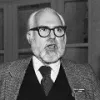
- R. J. Rushdoony
1. Why We Will Never Win the War on AIDS, by Bryan J. Ellison and Dr. Peter H. Duesberg (El Cerrito, California 94530, 190 El Cerrito Plaza, Ste. 201: Inside Story Communications, 1994) is a report on research which denies that there is a link between HIV positive and AIDS. There is a correlation between homosexuality, drugs, syphilis, and AIDS. People who are not in any category of such a background have a small chance only of coming down with AIDS. The authors question the wide prevalence of AIDS in Africa and, citing Philippe Krynen, see the “threat” as invented for media consumption. The sick are brought in with tales of family members dying of AIDS (rather than, say, an auto accident) because AIDS brings in money and support.
Dr. Duesberg, a highly regarded scientist, has paid a price for his stand, including the cancellation of research funds.
2. Jim Owen, always a relevant writer, is the author of a new book. Christian Psychology's War on God's Word: The Victimization of the Believer (East Gate Publishers, 4137 Primavera Road, Santa Barbara, California 93110), which gives us a clear account of the dangerous shift even within the churches from the belief in man as a sinner to man as a victim (p. 18). There has been a shift from Biblical to psychological doctrines, so that sanctification has become self-actualization; “renewing of your mind” (Rom. 12:2) has become reprogramming, and the dysfunctional replaces sin (p. 13). All this is a surrender of Biblical Faith.
Owen is plain-spoken and Biblical in his comments. Thus, he cites one young woman who told a speaker she had been molested as a child. Did she not have a right to feel bitter and angry, she demanded, tearfully? The speaker's answer was to the point: “Why are you letting Satan rob you of your joy in Christ?” Was she relishing her suffering, enjoying victimization? (p. 119f).
This is the kind of Biblically faithful analysis that makes Owen so telling.
3. Peg Luksik and Pamela Hobbs Hoffecker have written a timely study of Outcome-Based Education: The State's Assault on our Children's Values (Huntington House Publishers, P. O. Box 53788, Lafayette, Louisiana 70505; paperback, 207 pp.). Outcome-Based Education tells us that statist educators will not stop until the total control of the child's mind is achieved, and that the goal of the schools is now to remake the child rather than education in terms of the basic skills of learning. The slogans of these educators are, “All students shall succeed,” meaning no failures; “Success breeds success” means inflating grades; and “It takes a village to raise a child,” which is nonsense. It takes a teacher with sense. Solutions are confused with slogans (p. 47f.).
Schools should have academic goals, and they should teach the skills of learning. These are replaced with social goals, and with humanistic objectives (p. 56 ff.). “The three R's are replaced with the four G's—grade inflation, green peace, group cooperation, and global awareness” (p. 67).
How seriously the socialistic goals of OBE are taken can be seen in the case of a brilliant student, David Moralis, who was denied his high school diploma for refusing what he deemed rightly was an unconstitutional requirement (p. 85).
Read this book to understand what has happened to our schools.
4. Dave MacPherson has been responsible for major changes in the eschatology of evangelical churches by his devastating studies of some of the central aspects thereof. In The Rapture Plot (Millennium III Publishers, P. O. Box 928, Simpsonville, S.C., 29681; 1995; paperback) MacPherson tells us of the strange tale of “rapture” writings, revisions, cover-ups, altercations, and confusions. No one has equalled MacPherson in his research on the “pre-trib rapture.” Attempts to discredit his research have failed and have in many cases been replaced with ignoring him. But MacPherson is a hard man to ignore because those who read him cannot ignore his research nor tolerate neglect of him by others.
Christians owe a debt of gratitude to MacPherson. He has religiously analyzed a position he once shared, and with one goal, the truth according to Scripture. In the past few decades, his several studies on the origins of modern evangelical eschatology have done much to cleanse the church of error. The sad fact is that some leaders who have shifted their position because of MacPherson will not acknowledge the church's debt to him.
5. Pastor Ovid Need, Jr., has a discerning and systematic mind, and this appears clearly in his study. Identifying Identity: A Biblical Examination of Assumptions Found in British-Israelism, Anglo-Saxonism, Christian Identity (spiralbound, 72 pp., King and Kingdom Publishers, P.O. Box 6, Linden, Indiana 47955; telephone 317-339-4609; $14 postpaid). This is a detailed exegetical analysis, made without rancor or unkindliness, of some of the basic assumptions of champions of that faith. In specific, the premises of one man are analyzed, but these are points common to most in the Identity Movement.
Ministers should keep a copy of this work on hand to answer questioners, or to loan to troubled persons. The fact that derelict ideas are sometimes held by likeable people does not lessen their danger. Pastor Need's analysis represents much painstaking study, and we are all the better for having his manual. It is detailed, specific, and Biblical. He explains and corrects rather than condemning and is always gracious.
- R. J. Rushdoony
Rev. R.J. Rushdoony (1916–2001), was a leading theologian, church/state expert, and author of numerous works on the application of Biblical law to society. He started the Chalcedon Foundation in 1965. His Institutes of Biblical Law (1973) began the contemporary theonomy movement which posits the validity of Biblical law as God’s standard of obedience for all. He therefore saw God’s law as the basis of the modern Christian response to the cultural decline, one he attributed to the church’s false view of God’s law being opposed to His grace. This broad Christian response he described as “Christian Reconstruction.” He is credited with igniting the modern Christian school and homeschooling movements in the mid to late 20th century. He also traveled extensively lecturing and serving as an expert witness in numerous court cases regarding religious liberty. Many ministry and educational efforts that continue today, took their philosophical and Biblical roots from his lectures and books.