Silly Surrenders
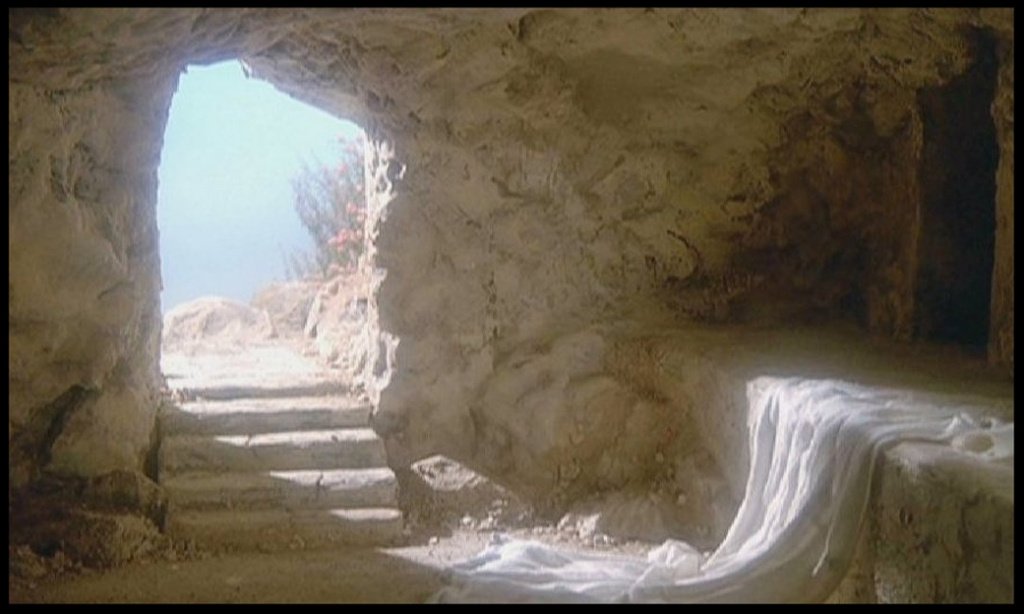
True, the name Easter is of pagan origin, but that observance has been known in much of our history as the Christian Passover, or. The Day of Resurrection. The name Easter does not alter the facts. As for easter eggs, their origin is indeed pagan, but they are not a part of the church’s worship, nor is their present status anything but as a treat for children. Who has seen them followed by pagan fertility cult rites? A little common sense is in order.
- R. J. Rushdoony
One of the sad aspects of the Christian community is its gullibility concerning its critics and their many tales about the Bible and our history. Every year I hear from some people that any observance of Christmas or Easter is pagan and wrong. Is this truly the case?
True, the name Easter is of pagan origin, but that observance has been known in much of our history as the Christian Passover, or. The Day of Resurrection. The name Easter does not alter the facts. As for easter eggs, their origin is indeed pagan, but they are not a part of the church’s worship, nor is their present status anything but as a treat for children. Who has seen them followed by pagan fertility cult rites? A little common sense is in order.
The yule log had origins in paganism, but do you know of any instance where the yule log had a part in Christian worship? The Christmas tree is Christian in character. It is an emblem of Jesus Christ, our tree of life. In Revelation 22:2, the tree of life is described as an ever-bearing fruit, and ever-green. Hence the use of evergreen trees. When I was a child, the Christmas tree was decorated with popcorn strung in long lines, and with fruits, to typify Revelation 22:2. Some early commercial ornaments were made to resemble fruits.
But what about the Rev. Alexander Hislop and his study of The Two Babylons? Hislop was a devout and a learned man, but he erred by seeing similarities as connections. The fact that a baseball team calls itself the Indians does not make the team of Indian origin. All trees, virtually, have been worshipped at some time. If you have a tree once regarded as holy in your yard, are you therefore a secret and pagan tree worshipper? There are few things in our world which men have not made a part of their worship at some time!
But what about December 25? There is no evidence of Christ’s birth on that day, is there? Well, the great Alfred Edersheim, in The Life and Times of Jesus the Messiah, 2 vols., presented evidence that it well could have been the date for very good reasons. Yet too many churchmen seem to believe that they gain intellectual respectability by agreeing with the critics!
But is it morally right to celebrate such days? And what is immoral or un-biblical about doing so? In antiquity and later, the birthdate of kings was celebrated, and not to do so was treasonable. The New Testament declares Jesus Christ to be King over all kings, and Lord over all lords (I Tim. 6:15). Not to observe His birthday would have meant denying Him. When persecutions abated, we see at once a developed celebration, indicating a long, covert observance.
This birthday tradition has been transferred in our time from kings to countries. In the U.S., for generations the Fourth of July was the great civil holiday celebrating the birth of the country. Its decreasing importance means a decreasing regard for the country by the people.
Cynicism comes cheaply and easily, but its effects are corrosive and lasting. It is sad to see churchmen too ready to believe what the ungodly have to say. If they say that many other religions have had crucified saviors, or virgin births, or whatever, it does not occur to them that Biblical faith and history have been mimicked since antiquity.
If we are Christians, we need to know God’s word, and also our own history. We are called to be “more than conquerors” (Rom. 8:37), not retreatists. We are people of victory.
- R. J. Rushdoony
Rev. R.J. Rushdoony (1916–2001), was a leading theologian, church/state expert, and author of numerous works on the application of Biblical law to society. He started the Chalcedon Foundation in 1965. His Institutes of Biblical Law (1973) began the contemporary theonomy movement which posits the validity of Biblical law as God’s standard of obedience for all. He therefore saw God’s law as the basis of the modern Christian response to the cultural decline, one he attributed to the church’s false view of God’s law being opposed to His grace. This broad Christian response he described as “Christian Reconstruction.” He is credited with igniting the modern Christian school and homeschooling movements in the mid to late 20th century. He also traveled extensively lecturing and serving as an expert witness in numerous court cases regarding religious liberty. Many ministry and educational efforts that continue today, took their philosophical and Biblical roots from his lectures and books.