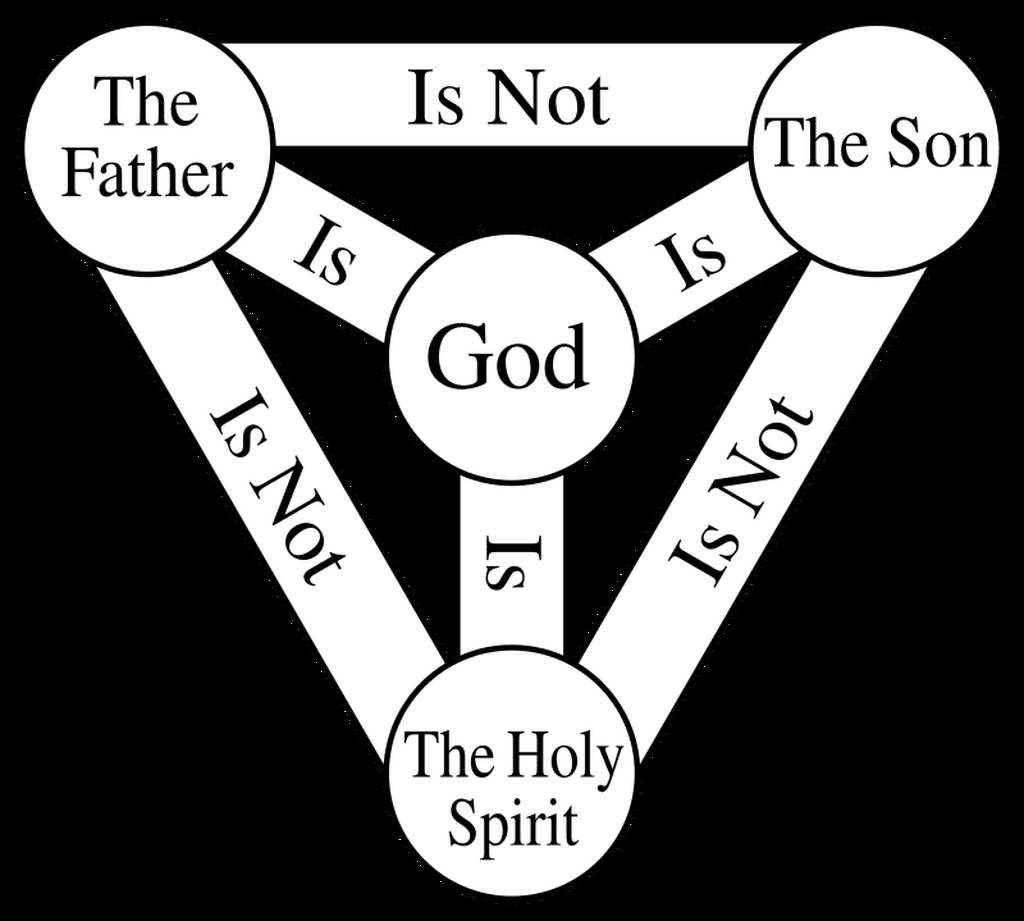
The Trinity
No point of doctrine is as crucial as that of the Trinity. In Scripture man is condemned for worshiping false gods and for making God into his own image (Rom. 1:22-23). Though it is often denied or misunderstood, the Scriptures reveal God to be a Trinity. To accept anything else is to worship God falsely. The crux of the dilemma, however, is that man is no longer capable of knowing God truthfully. His sinful state, and its natural propensity to suppress the truth of God in unrighteousness, will cause him to worship a false god (Rom. 1:18-23, 3:10-18). Because of such a debilitating state, man’s understanding of God must come through God’s revelation of Himself. Man must therefore first be regenerate before he can come to understand God. Even after regeneration it is often only the ongoing work of sanctification that enables the sinner to come into a fuller understanding and comprehension of the Triune nature of God.
- Scott Scrimshaw
No point of doctrine is as crucial as that of the Trinity. In Scripture man is condemned for worshiping false gods and for making God into his own image (Rom. 1:22-23). Though it is often denied or misunderstood, the Scriptures reveal God to be a Trinity. To accept anything else is to worship God falsely. The crux of the dilemma, however, is that man is no longer capable of knowing God truthfully. His sinful state, and its natural propensity to suppress the truth of God in unrighteousness, will cause him to worship a false god (Rom. 1:18-23, 3:10-18). Because of such a debilitating state, man’s understanding of God must come through God’s revelation of Himself. Man must therefore first be regenerate before he can come to understand God. Even after regeneration it is often only the ongoing work of sanctification that enables the sinner to come into a fuller understanding and comprehension of the Triune nature of God.
The Revelation of the Trinity
Making known the Trinity is a necessity of revelation. As with many things of God it escapes man’s natural ability to reason (Is. 55:8). The Trinity is, however, revealed in Scripture and shows itself to be of a progressive nature. The person of God and the nature of His being is weaved into the fabric of the Old and New Testaments, it builds itself on an increasing understanding and developing framework. The context of the revelation is that of the infinite explaining Himself to the fallen and depraved finite. As such, the revelation comes forward in stages allowing the understanding of the finite to be shaped so as to be able to receive the revelation in full.
Revelation therefore, is observed to come forward in three stages. The first is simply the inborn witness found in the heart and mind of man that there is a God. If this is left alone to develop naturally, this inborn understanding produces a rejection of the Biblical God, polytheistic forms of idolatry and false worship (Rom. 1:21-25). Thus, it is against this backdrop that the second stage of revelation is given in which God emphasizes that He is the self-existent, one and only God (Ex. 3:14, Is. 44:6, Ex. 20:3)- He establishes His monotheistic nature. His absolute oneness (Dt. 6:4).
In establishing His absolute oneness, God does not mean that there is not a plural nature to this oneness, in fact the very nature of God’s essence is a oneness of unity, not simplicity. That there is only one single entity deserving of being called God is the monotheistic certainty. That this supreme entity revealed as God actually consists of a plurality is the unified certainty. At all given moments, this plurality exists because it is the very character of the nature of the only true God. As such, the plural nature of God’s existence does not violate the monotheistic certainty.
It is important to realize that God’s plurality is not merely different manifestations of a single entity but that this single entity actually exists as a plurality. This is the significance of the statement, “Hear O Israel, the Lord our God, the Lord is One” (Dt. 6:4). Literally in the Hebrew it states, “Jehovah our Elohim is one Jehovah.” in other words: the only Lord (there is no other) who is the plural God (He consists of more than one person) is one Lord (the multiple of persons is united).
This is unequivocally supported by Loraine Boetner’s refutation of an error found within the Jewish teachings of Moses Maimonides and his thirteen articles of faith (Studies in Theology). “Moses Maimonides attempted to make God an absolute one, by referring to God as a ‘Y’achid’ as opposed to a united one, ‘achid.’ in key scriptures the use of ‘achid’ for the word ‘one’ and the use of ‘Elohim’ for the work God’ gives insight to the unity and plurality of the Godhead.” Both of these words are found in the first three chapters of Genesis and help give understanding as to their proper meaning, in Genesis chapter one verse five “achid” takes two separate objects, evening and morning, and unites them as being one day. in Genesis chapter two verse twenty-four “achid” takes two separated persons, man and wife, and unites them as being one single entity. Therefore we may conclude Deut. 6:4 is speaking of the unification of what is plural into what is now singular, yet all the while allowing for the maintenance of individual distinctions, in Genesis “elohim” is used to establish that the only Divine being consists of more than one personality as the usage of the word itself denotes (Gen. 1:26, 3:22).
Because of such revelations, depraved, fallen man has been given the understanding that God is both a monotheistic certainty and a unified plurality. This allows for the third and final stage of revelation to be given which explains that the God who is One is also three Persons. They are referred to as the Father, Son, and Holy Spirit, it is important to recognize that these three are indeed three actual persons. They are distinctly in possession of their own individual personality. Because these three comprise the plurality of the One God, each person is actually said to be God. Such being the case, there is one, and only one Being, who while being plural in nature, is forever, always and only, God.
False Views
The Trinity is not to be confused with the idea of three gods but rather that the being who is God, is the unification of three personalities. Nor is this to be confused with the idea that these three are simply three different manifestations of a God who is comprised of a singular nature. Such an idea would be similar to “a man who is known in his own family as father, in the business world as banker, and in the Church as an elder” (Boettner, Studies in Theology, 107) This idea sees the Trinity only as three different modes of God and is incorrect. God is the singular unification of three distinctive and individual personalities, not merely the manifestation of a singular personality in different modes. The distinctive nature here is “but a distinction, not a division” (Calvin, Institutes, 1:142). In His Triune existence, God is one substance, three persons. The Nicene Creed (A.D. 325) states it clearly: “We believe in one God the Father Almighty…..And in one Lord, Jesus Christ, the only-begotten Son of God, begotten of the Father before all worlds, God of God, Light of Light, very God of very God, begotten, not made, being of one substance with the Father….. and in the Holy Ghost.”
Boettner profoundly writes that:
Within the one Divine substance or essence there are three mutually related yet distinct centers of knowledge, consciousness, love and will.
The substance or essence is that which the different members of the God-head have in common [and], “person” is that in which they differ.
So that
Each person possesses in toto the one indivisible, incorporeal substance of Deity in which the attributes and powers inhere, and therefore possesses the same infinite knowledge, wisdom, power, holiness, justice, goodness and truth, (ibid., 106)
This is critical to the proper understanding of the Trinity. The attributes and power of God are inherent in the substance or essence of God and it is within this one Divine substance that the individual personalities which make up the Godhead are to be found. As such, in His Triune existence: God is our heavenly Father even though the first person of the Trinity is also known as Father. God in His Triune existence is known as Savior even though the Second Person of the Trinity is also known as Savior. God in His Triune existence is the Spirit even though the Third Person of the Trinity is also known as the Holy Spirit.
As Boettner again states: “The doctrine of the Trinity cannot lead to Tritheism; for while there are three Persons in the God-head, there is but one substance or essence, and therefore but one God” (ibid., 107). Furthermore he writes that “the singular pronouns I, Thou, He and Him are applied to each of the three Persons; yet these same singular pronouns are applied to the Triune God who is composed of these three Persons” (ibid., 109). Either there is Trinity or the Bible is a seif-contradicting document. However, as the Scriptures state, the Bible is both reliable and trustworthy.
A vital aspect of this subject is that each member of the Trinity is a person as opposed to an “it.” Each is in full possession of complete personality. Most believers have little difficulty conceiving of the Father and Son in this manner, but many people fall into error when the idea of personhood is predicated of the Spirit of God. A cursory look at Scripture establishes the fact that the Holy Spirit is a person. The Holy Spirit is not an energy or an “it,” but a “He” (Lk. 12:12, Acts 10:19-20, 13:2, Rev. 2:17). Also of importance is that apart from having revealed (clothed) Himself in human form in the person of Jesus Christ, in saying that God is a Person it is not to be misunderstood that God is a human being, or a human-like being, or one who bears human physical resemblances (Dt. 4:12, Jn. 4:24). Any Scriptural language that speaks of God as bearing human likeness is figurative language, or else God would also physically be a rock (Dt. 18 and 31) or possess wings and feathers (Dt. 32:11).
Additional Explanation
The Trinity has another important distinction that must be drawn. Because Trinity is God and God is Trinity there has never been a beginning nor end to Him. Existing as God does, a Being with a Triune nature, no one member of the Trinity has a created beginning. This is not to say that Jesus, as man, did not have a beginning. However, Jesus as God, Divine in essence, preexistent in nature is not a created being. Furthermore, it must be understood that His Sonship is not incarnational. That is to say that Jesus, as Second Person of the Trinity, has always been the Son (Jn. 17:1-5, Westminster Confession of Faith 2:3).
This sheds light on such Scriptures as Colossians 1:15 where Christ is referred to as the “first born of all creation” and Matthew 27:43 where He is called the “Son of God.” When the Trinity is properly understood we come to realize that such Scriptures are referring to His eternal glory, His position of authority (Mt. 28:18, Col. 2:9-10) and His created human nature (Gal. 4:4). Thus we find such statements referring to Jesus as the “Son of Man” (Mt. 9:6, Jn. 5:27) and the “Son of David” (Mt. 12:23, 15:22). it is revealed that the Second Person of the Godhead emptied Himself of His complete and total equality with God and took on the form of man (Rom. 8:3, Phil. 2:6-8). in becoming a man Christ became no less God: He merely temporarily took upon Himself the limitations of man (Mt. 17:2, Jn. 1:1 & 14, 17:5, Col. 2:9). This is the difference between the economical and ontological Trinity.
Furthermore, it must be remembered that the Scriptures were given to us within the context of the Jewish religion and must therefore be understood accordingly. The Jewish emphasis on the rights and inheritance of the firstborn explains the meaning of what it meant for Christ to be the firstborn of all creation. The idea is not one of Christ as having been created prior to creation but as holding supremacy over creation. Consequently, Christ has authority over Satan and his demons (Mt. 12:22-28), has the authority to forgive sins (Mt. 9:6), and to execute judgment (Jn. 5:27).
Having said all of the above, I think it important to understand that the chronology of the written revelation and the above stages of content are not necessarily synchronized. The revelation is given at various and multiple intervals based on who God is, not what man may comprehend. Therefore, for example, the beginning chapters of Genesis can use the word “elohim” for God, or use the word “achid” to describe the oneness of God, even though the fullness of such implications won’t be divinely manifested or humanly understood until later.
It is also important to understand that the comprehension of the Trinity in any believer’s mind may also develop in stages. Different cults place extreme emphasis upon various aspects of this doctrine to the exclusion of its full truth. As such there are those who are the elect of God coming out from these various backgrounds who have had only a portion of the true understanding given to them. For many people in our unchurched and cultic society, the Biblical understanding of the Trinity is simply no longer common knowledge. They are once again having to have their minds conditioned, first to understand a monotheistic concept of God, secondly to understand unity and plurality, and finally Trinity.
Though the Scriptures develop this theme in full, the unchurched and churched alike are so Biblically illiterate that it is time once again to bring this doctrine solidly across from the pulpit. The believer must, of necessity, come to accept the Trinity in its totality in order to avoid worshipping a false god.

- Scott Scrimshaw